
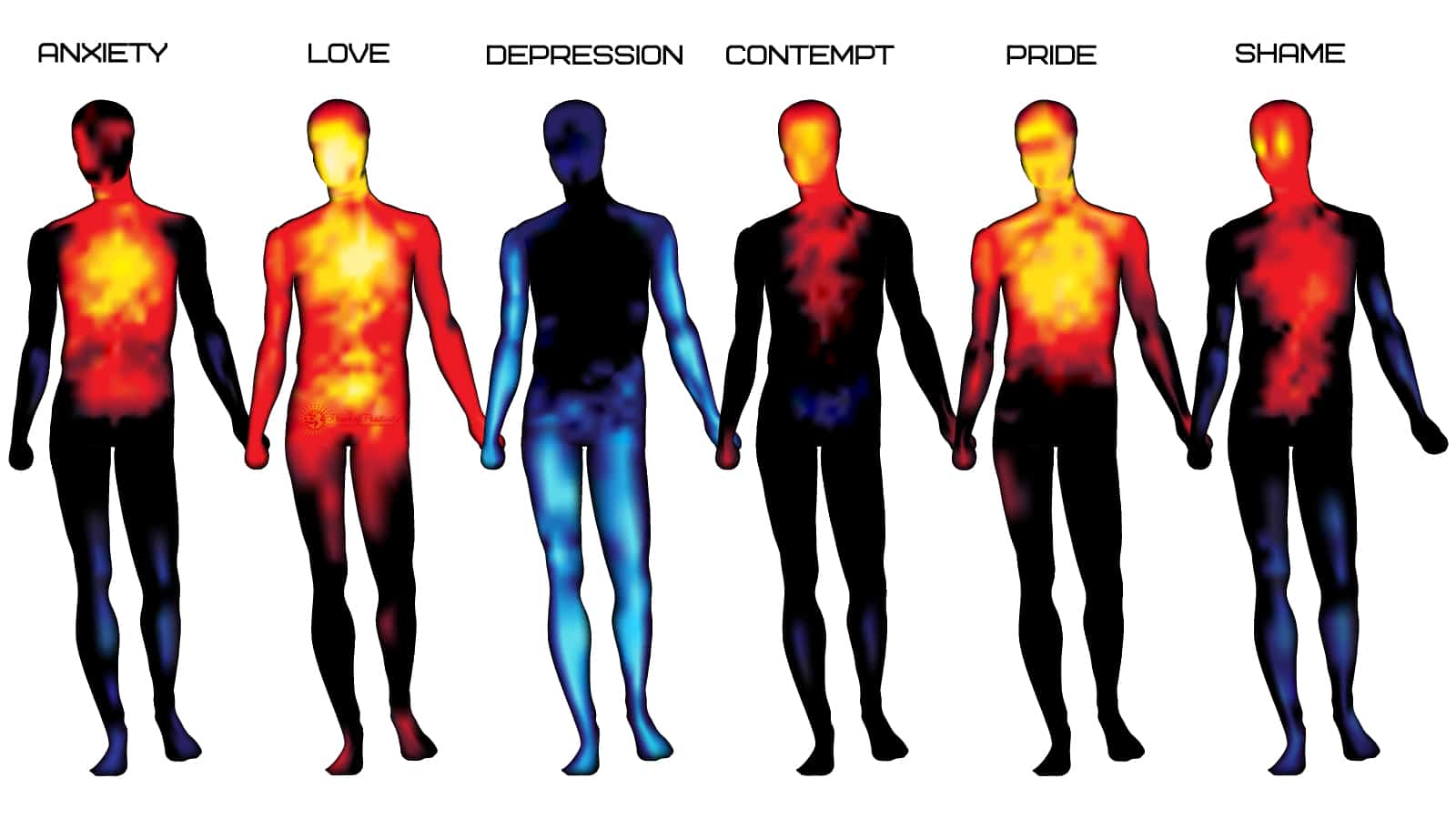
Many people don't realize that there is a strong connection between emotions and the physical body. When you feel a sensation in your body, you might be thinking it's something medical and need to see a doctor. You might adjust your diet, take a medication or supplement, or stop exercising to see if it goes away.
But what if it's just an emotion that's happening inside your body? It's true that emotions manifest themselves in the body as physical sensations.
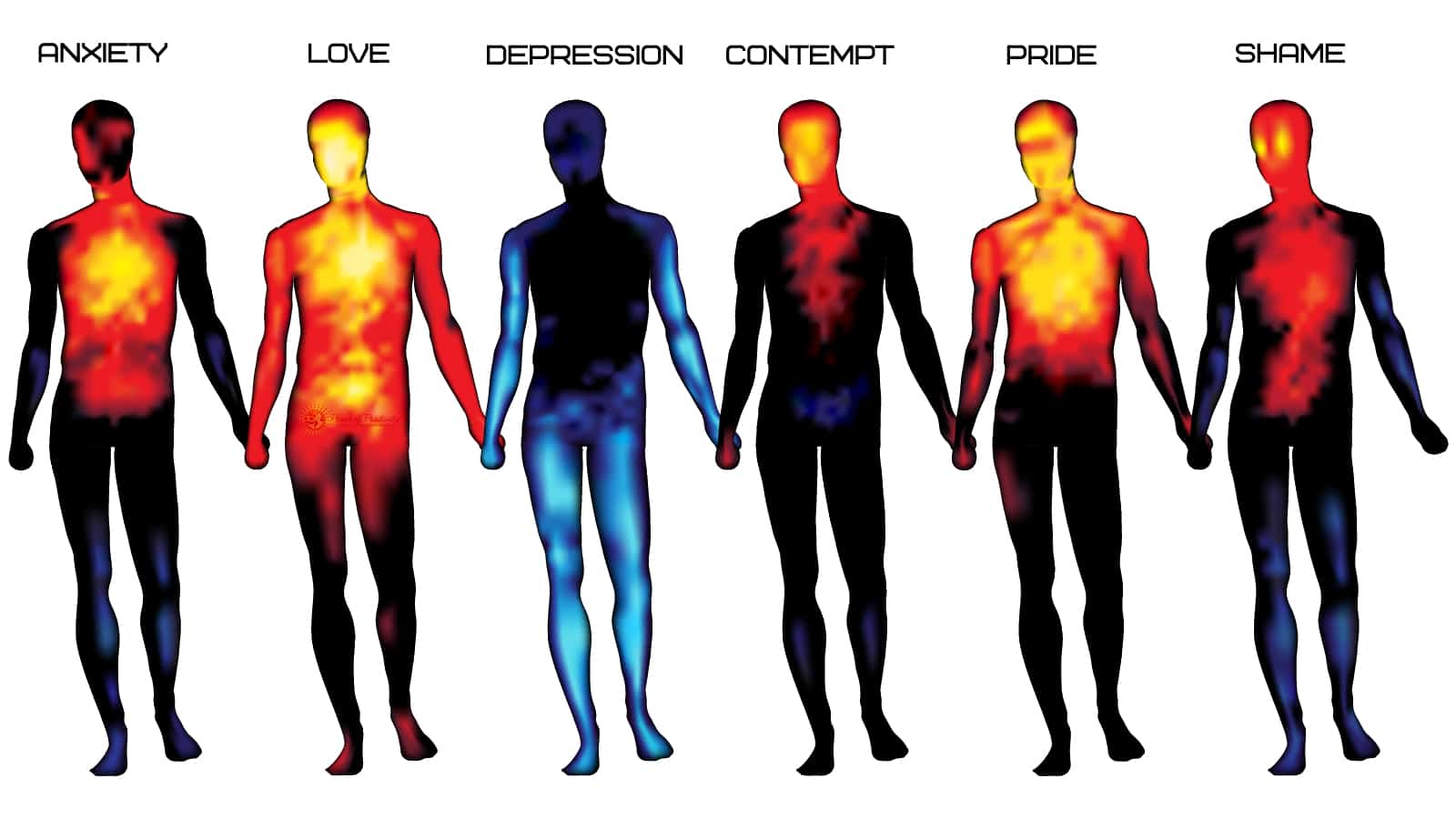
Here are some common examples of how emotions feel in the body:
- Anger is experienced as clenching in the jaw, a tight chest, and hands clenched
- Sadness is experienced as a heaviness over the head and eyes, a lump in the throat, and tightness or pain in the chest
- Anxiety is experienced as cold or fidgety limbs (hands, legs, feet), flittering in the stomach, and quick or shallow breathing
- Shame is experienced as hot or heavy eyes, hanging head and drooped shoulders, and coldness throughout the body
- Joy is experienced as feeling warm all over, with relaxed muscles in the body and face
It's common for people to come into counseling because they thought what they were feeling was a medical issue, only to be told by doctors that it's mental or emotional. While this can be extremely frustrating because it does not provide any answers right away, it's encouraging because it means you can address the issue in counseling and see good progress.
We, as clinicians, want you to have a good understanding and awareness of how you experience emotions in your body. It's an important foundation for the work we do with you because your body will be alerting you to things that need attention.
Becoming Aware of Your Body
So let's get practical. To get to know how you experience emotions in your body, we need to first focus our attention on the body to be able to notice how it feels.
Turn your mind's eye onto your body, so you're paying attention to how it feels. Start with your feet. Wiggle your toes and scrunch them up, then release and relax them. Simply notice how that feels.
Move up to your legs and notice all the muscles in your calves and thighs. All you need to do is become aware of any sensations you might be feeling. You don't need to do anything about it.

Continue moving up into your torso, noticing all the sensations you might be feeling in your stomach, chest, arms, and shoulders. If you need to tense a muscle or move it around briefly to better notice it, do that and then relax it.
Finally, rotate your head around on your neck and move all the muscles in your face. This might make you look strange for a moment as you make funny faces!
What Does It Mean?
Everything you just noticed is now information you have that can tell you what you're feeling. Since emotions are hardwired to the body, we all experience them the same. Some people might experience them to a greater or lesser degree, but they are generally the same from person to person.
You can use the chart on this site to determine which emotions you might be feeling based on the data you just gathered. You can also use the list at the top of this post.
Connecting what you feel in your body with the corresponding emotions is a critical step. When you can put an emotion to your body sensations, you can ask questions such as:
- Why would I feel this emotion?
- Did something happen recently that would warrant feeling this way?
- Am I anticipating something happening that would warrant this feeling?
- What thoughts am I having along with these feelings?

Answering these questions can help you put the puzzle pieces together to understand what you're feeling and why. Knowing this can bring significant relief as well as empower you to begin taking steps to addressing the real issue.
You might need help from a counselor along the way if you have trouble with this. It can be very beneficial to have someone talk you through it and reflect back to you what they are seeing. This "mirroring" can give you a clearer picture of yourself, and help you see what you cannot see in yourself.
Start Counseling for Anxiety in Tigard, OR Today
Our emotions don't have to take take over our body, especially when dealing with anxiety and worry. Our team of skilled therapists is ready to help you find relief and release, in spite of your anxiety. Contact us today to talk about how we can help you start feeling more grounded and to schedule an appointment with one of our counselors. We offer both face-to-face (in-person) counseling sessions and online video counseling to residents in the state of Oregon.
More Therapy Services at Discover Counseling in Tigard, OR
Not only can we help with your anxiety and depression, but we can also help navigate difficult life transitions. Especially, the grief and loss we are all feeling right now! This is an especially difficult time for engaged couples and couples on the brink of separation or divorce. Also, for pregnant, postpartum, and parenting couples. Basically, everyone is facing some type of stressor right now. Please let our therapists help you navigate this difficult time.

About Aaron, the Author
Aaron Potratz is the owner and clinical supervisor of Discover Counseling in Tigard, OR. He is a Licensed Professional Counselor in Oregon providing psychotherapy and business consulting services in his private practice. Aaron often writes about mental health and relationship issues. He also hosts a weekly podcast called Shrink Think with his business partner, Nathan Hawkins, about facing fears and difficult challenges from a therapist's perspective.
Ready to take the next step?
We'd love to hear from you. Our therapists serve Tigard and the greater Portland area — in person and online across Oregon.
Request an Appointment