

You've heard it before. You know the phrase, "It's all about balance". Maybe from your yoga teacher, professor, grandmother, friend, or social media influencer. It's commonly used, but widely misguided.
You might be in school full time, work full time, or at home full time, and attempting to manage a household, kids, socialize, eat right, exercise, volunteer, sleep enough, minimize screen time, and *insert any other area of life you find yourself attempting to incorporate into “balance”*.
These are good, healthy activities! But if you’re feeling burnt out, scattered, anxious, or irritable, it might be time to check in with yourself.
Let’s Take a Step Back…

Balance hasn't always carried the same weight of expectations as it does today. Over the last 50 years with the rise of technology, we suddenly are more aware of the choices and options for how our lives can look. For instance, communication. There was a time when there were limited ways to converse with each other. You wrote, maybe called on the phone, or had a face-to-face dialogue. Nowadays there is email, text, Snapchat, Instagram, Facebook, dating apps, FaceTime, and everything in between (and sometimes all at once)!
These in and of themselves are not bad, and certainly, enhance our lives in meaningful ways. (Such as making access to therapy easier with online therapists.) There is no doubt that culture has shifted and provided a lot of open doors that once were not an option. For example, we have increased knowledge of healthier food options, can throw rad parties thanks to Pinterest, and Corgi beach days are a thing because we've embraced being creative and connecting online.
Perfectionism in Sheep’s Clothing
Because we haven't shifted the meaning of balance into the nuances of today's world, we unintentionally think a balanced life is a perfect life. With perfection, we often times attach the expectation of contentment and fulfillment.
Somehow this idea of balance has become an antidote to the anxiety-ridden life of choices. We want balance in order to be healthy and fulfilled. With such a strong emphasis on balance being our anchor, we end up draining ourselves in an effort to check off boxes predetermined by culture, but it’s actually perfection in disguise that we’re tirelessly chasing in hopes of finding satisfaction.
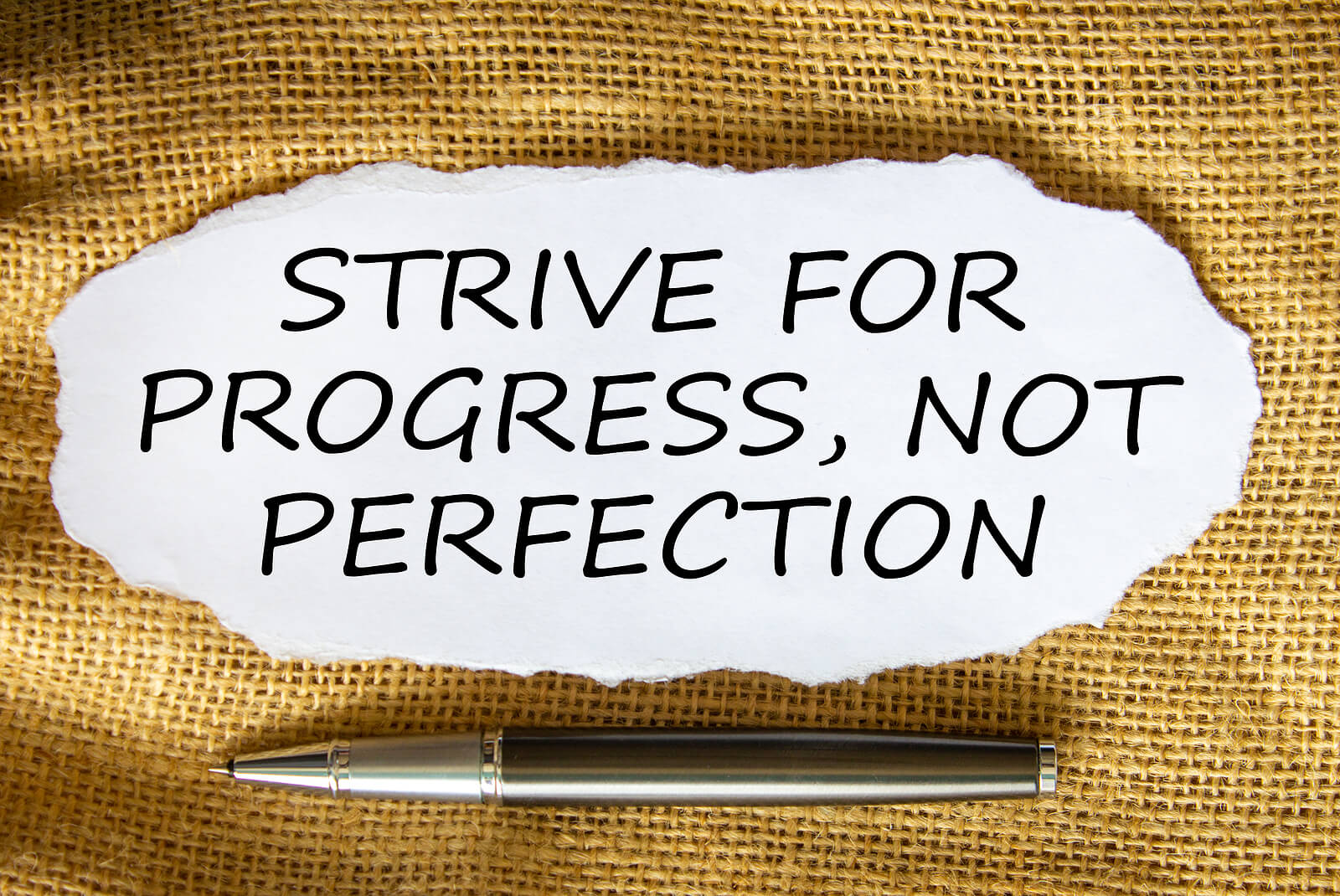
How do we know it’s perfectionism in disguise? Because when we can’t meet this definition of “balanced”, we can feel like a failure. The emotions we might feel are disappointment, frustration, and possibly even shame, disgust, and worthlessness. The thoughts we could have are "I just need to try harder", "What am I doing wrong?", "I'm just not as good as everyone else". Our behaviors might be adding in more activities in an effort to “try harder”. Or it could be the complete opposite and we become apathetic and turn to unhealthy coping mechanisms to deal with the stress of it all.
This is not the product of real balance. Negative thoughts and hard emotions such as these belong to the family of perfectionism. When we're practicing real balance, there's room for grace and growth; the pressure to “do it all” is alleviated, negative self-talk isn't as loud, and the label of failure is less prominent.
So What Now? How Do We Find Balance?
How do you shift the expectations of balance? Balance means figuring out rhythms in your life that keep you steady. Balance is about learning how to spend the only 100% you do have and adjusting as needed. Instead of attempting 100% in exercise, 100% in work, 100% in social, 100% in extracurricular (that's already 400%!), and any other boxes you feel like you need to check off. You look at the season of life you're in and prioritize the top few areas you want to devote more attention to that help you maintain a realistic sense of steadiness and sustainability in YOUR life.
Where are you at today? Are you adjusting to a new job or having the kids at home for the summer and your exercise routine is taking a hit? That’s okay! Balance might look like adjusting from an hour workout at the gym to a 30-minute evening walk a few times a week.
Steps to Help You Find Balance
Here are some steps to help you identify and adjust your life so that you experience the benefits real balance has to offer:

- Spend some time reflecting on the responsibilities you have (i.e work, kids, school, etc.); write them down
- Brainstorm additional rhythms or activities you would like to incorporate (don’t limit yourself at this point); write them down
- Take a look at the lists from 1 and 2. What from list 2 can be incorporated into list 1 without overextending your 100%? What needs to be adjusted to maintain a steady balance?
- Remind yourself your season of life will look different from others so limit comparing yourself and focus on you
- Repeat as needed and reach out for help from Discover Counseling if you get stuck!
**Pro-tip! Life situations are constantly changing, so we need to be checking in with ourselves regularly. Using the natural shift of seasonal changes can be a great time to re-evaluate where you're at to help maintain a realistic picture of where you want your efforts to go.
Remember, balance is about adjusting how/where you want to spend your energy. It is not about using your energy to do everything in an effort to be perfect!
Are You Ready to Start Therapy With An Online Therapist in Oregon?
It is so easy to feel like finding balance means trying to be perfect. Our online therapists in Oregon can help you adjust your life so you can have true balance. In order to start online therapy at Discover Counseling just follow these steps:
- Contact us to speak with an online therapist
- Make your first appointment at Discover Counseling
- Find your balance in life
Mental Health Supportive Services At Discover Counseling in Tigard, OR
Our understanding online therapists in Oregon offer several options to support you no matter what season of life you are in through online counseling. Such as anxiety treatment, trauma recovery, therapy for life transitions, and counseling for postpartum. In addition to therapy for teens, Christian counseling, and codependency treatment. We also offer support for your relationships with premarital counseling, couples therapy, marriage counseling, and therapy for relationship problems. At Discover Counseling we look forward to helping you find what balance looks like for you.
Ready to take the next step?
We'd love to hear from you. Our therapists serve Tigard and the greater Portland area — in person and online across Oregon.
Request an Appointment