

This is the second in a multi-part "Discover" series, intended to give you practical tools for your journey toward health and wholeness. In this post, you will discover coping skills for anxious thoughts and why anxiety treatment might be a solid consideration.
Some worry is good
Let's start off on a positive note. Some worry and anxiety can be good - in fact, it's quite normal. Feelings of worry can be helpful in pointing out that something in the future needs our attention and possibly some action. This can prevent something bad from happening or enable us to take care of something that will be needed.
There have been times when I have caught myself worrying just before falling asleep at night because I realized I had forgotten to add something important to my to-do list earlier that day. I was so glad I worried for that moment and remembered!
Do you worry too much?

If some worry is good, how much is too much?
There are several indications to look for that you might be worrying too much. First, worrying about things that are not in your control might become problematic. Second, worrying about things too far into the future or about things that may not actually happen can be unhelpful. Third, continuing to worry about something you have already taken care of can get out of control.
Here are three specific things you can practice doing right now in order to manage your worry and anxious thoughts.
1. Focus on what you can control.
2. Focus on the present.
3. Acceptance.
What can you do about anxiety?

Worrying about things outside your control is a frustrating and fruitless endeavor. It's like trying to control the weather. It's unproductive because there's nothing we can do about the weather. The best we can do is prepare for the possibility of rain or col and check the forecast before we leave.
In the same way, worrying about things outside your control will only make you more anxious and controlling. The more you discover you don't have control over, the more you will want to control and the more anxious you will become. It's a never-ending vicious cycle.
Shifting your focus away from things outside you and onto what is inside your control can help manage your anxiety. When you let go of trying to control your environment or of trying to obtain a specific outcome and focus on your response to it, your options begin to open up. You can begin to realize the impact you have on the world around you while also accepting the reality that you don't have as much control as you'd like.
Some basic things you can focus on that are within your control are:
- what you think or how much you dwell on something,
- what you say and how you say it (or what you choose to not say),
- whether or not you take action.
What you do with each of these can have significant consequences.
For example, if I'm worried about how someone will perceive me in a job interview, I should shift my focus onto dressing appropriately, preparing myself for the interview, and being intentional about making eye contact and communicating how interested and qualified I believe I am for the position. I cannot control what they think of me, but I can look back after the interview knowing I did my best to manage my reputation in hopes it has a positive impact!
Be here now
One of the hardest things to control about worry and anxiety is the future. It is another one of those things that you cannot control but affects you greatly. You want the future to go a certain way or you want to make sure it does not go a certain way. In all of this, most people find themselves perpetually living in the future and not in the present moment anymore.
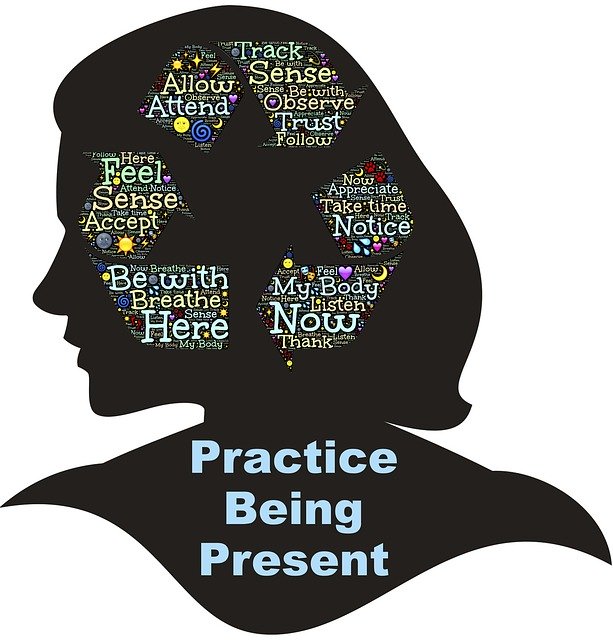
Letting go of the future and focusing on the here and now can be difficult. But it can also be liberating. Not having to worry about things you cannot control or about things that may not actually happen is quite freeing. Learning to lean into the unknown and accept it as a reality of life can make it more interesting and exciting.
Practicing mindfulness and focusing on what is happening inside you right now can get you into the present moment. Moving tasks that are not immediately due from your to-do list can help you focus on what needs to be done right now. Looking around the room you're in and taking in all the sounds, sights, and smells around you can also help ground you in the here-and-now. Making a note to yourself with a reminder alert for a future date can help you let go right now of worries about the future.
If worry about the future is really bad, it might be an indication that you're mismanaging something. You might be procrastinating too much. Or, you might not be organized enough. You might be intentionally avoiding something overwhelming. You might not have the skills to handle the issue and need to strengthen your toolbox. If any of these sound like you, it's probably time to talk with a professional.
Let it go
In focusing on what you can control and only on the present moment, you're forced to let go of a lot. While this is challenging, it's also freeing because those things you're trying to carry are too heavy a burden and weigh you down in ways you're not meant to be. You only have so many resources, so focusing them in the right ways and on the right things means not spending those resources on certain things.
I like to think of this as a boundary issue. You only have a limited number of "yesses." When you say "yes" to one thing, you must now say "no" to something else. In the case of worry and anxiety, you're saying "yes" to things you cannot control and saying "no" to things within your control. In other words, you're saying "yes" to stress and fear while saying "no" to peace and confidence. Practice reversing this by intentionally saying "no" to the worry or anxiety so you can begin saying "yes" to peace and calm.
How do you let go of worry and anxiety?
Letting go of things outside your control involves a lot of acceptance. In some therapeutic circles, this is called "radical acceptance." It means realizing there is nothing you can do about it then taking the radical step of just accepting it for what it is, regardless of whether or not you like it.
Part of acceptance also involves accepting life may not be what you want it to be. Letting go of those outcomes means you're left with discomfort that needs to be managed. Follow the steps above to focus on what you can control in order to properly care for those feelings, and they will dissipate. You can also work on strengthening your ability to tolerate discomfort. Living life well involves a lot of discomfort, so learn to become comfortable being uncomfortable.
Another part of acceptance involves trusting yourself and trusting the process. You may not have a good track record with managing situations, so your trust levels may be low. That's okay. Practice building trust in yourself by allowing life to happen on life's terms, see that you can manage through it, and this will build trust in the process. Keep in mind this takes time and opportunity to practice. How do you know you can manage through it? By letting it happen and seeing that it does happen. In fact, if you look back at your life, you'll see that somehow you've managed through everything you've been through!
Summary
When worry and anxiety come knocking on your door, be prepared. Practice being present, focusing on what you can control, and letting go of what you cannot control. Do these things in small situations and build up your skills for larger situations. With time and practice, you'll find yourself able to handle more than you ever thought you could and find more energy than you had before.
Begin Anxiety Counseling in Tigard, OR
Remember that most of these issues you're struggling with are likely just negative cycles you've found yourself in, which means you can change that and build new patterns for yourself. If you need more help, our team talk about anxiety treatment with us in Oregon soon. You can start your therapy journey by following these simple steps:
- Contact us to speak with a mental health professional at Discover Counseling
- Schedule your first counseling appointment
- Begin receiving support to better manage anxiety
Other Services Offered With Discover Counseling
Our caring counselors and therapists offer different types of therapy services to support your needs in addition to anxiety counseling. We are also happy to offer trauma recovery, life transitions, and postpartum support. In addition, we also offer teen therapy, Christian counseling, and codependency treatment. We also offer support for your relationship with premarital, couples, and marriage counseling. Plus individual therapy for relationship problems.

Author
Aaron Potratz is the owner and clinical supervisor of Discover Counseling. He is a Licensed Professional Counselor in Oregon providing psychotherapy and business consulting services in his private practice. Aaron writes about mental health and relationship issues. He also hosts a weekly podcast called Shrink Think with his business partner, Nathan Hawkins, about facing fears and difficult challenges from a therapist's perspective.
Ready to take the next step?
We'd love to hear from you. Our therapists serve Tigard and the greater Portland area — in person and online across Oregon.
Request an Appointment