

This is the third in a multi-part "Discover" series, intended to give you practical tools for your journey toward health and wholeness. In this post, you will discover how to build a lifestyle of contentment so you can enjoy your life rather than just survive it. You will also uncover obstacles that may be getting in the way and how we can help you deal with those things so you can discover the joy in your life.
Happiness, Contentment, and Joy
When people think of what's important in life, they often talk about being "happy." As I dig deeper with them, I find out they usually mean being "content" with life. Few people go so far as to say they are seeking a life full of "joy." What's the difference between these three?
Happiness is an emotional state, based on the feeling of being happy. It's temporary and is typically experienced as a heightened feeling state. Imagine deciding to paint your house and laboring over which colors to choose. After finally landing on a color scheme, you plunk down the cash (or invest several long weekends of your time) to paint. When it's finished, you step back and say to yourself, "Wow, I'm really happy with how it turned out!" You might even enjoy the color for many weeks, but that initial "excited" feeling fades. This is happiness.
Contentment, on the other hand, is a much deeper feeling that is more long-lasting. To be content with life means you have made peace with both the good and the bad, accepting life on life's terms. It means you don't resist when bad things happen and you don't overpursue good things. It also means you understand bad things are bad but good can come out of them, and life is full of good things but they fade with time or can often not be everything you thought they were.
Joy is in a different category altogether. When you can be content with life, accepting the bad with the good, you can see and experience the deepest beauty and meaning life has to offer. Joy is certainly a feeling, just like happiness, and it is absolutely felt deep within the soul, just like contentment. However, joy has the ability to see much farther beyond the immediate and thus can be more long-lasting and more powerful.
It starts with acceptance

In order to have joy, you have to be willing to see beyond what's right in front of you. This requires a great deal of acceptance - of both the good and the bad that life has to offer.
Accepting that life is full of ups and downs changes your expectations. It forces you to incorporate the simple fact that something may go wrong, bad things will happen, and that will be painful or challenging. I don't mean to sound negative or morbid here. I only mean to help you see that expecting difficulty will help you become better prepared for them when they happen, and enable you to be less reactive or resistant.
When you can accept life's challenges, you can then focus on how you want to respond to them. Maybe you want to be more patient or forgiving, maybe you want to be kinder to those around you. Seeing yourself more clearly like this gives you the opportunity to change something deeper down than just your immediate thoughts or actions. It's hard work, but it has tremendous ramifications for all of life because it can make you stronger, more resilient, and more joyful.
Here are three specific things you can practice doing in order to develop contentment and joy in life.
1. Look for the good in every situation.
2. Find the meaning or purpose in life's challenges.
3. Forgive as much as you can.
More than "positive thinking"

There is almost always something good in every situation - if you're willing to look.
This is not the same thing as a "silver lining" or seeing the world with "rose-colored glasses." These perspectives tend to be idealistic and don't deal with the full reality of life.
Looking for the good in a situation involves seeing beauty even in chaos, or finding goodness even in destruction. Let me give you two examples.
I have a niece who has been involved in ballet for many years and enjoys standing out in a crowd - not for attention but just to be her own unique self. When I watch her ballet performances, I see a lot of chaos from an adult perspective. The kids are trying their best to stay in sync, but they're still very uncoordinated but learning. From another perspective, however, it's a beautiful scene. There are so many innocent individual faces looking out into the crowd to find their parents watching them, working hard to remember all their moves, and trying to follow the kid next to them. It's chaotic, sure, but it's also filled with joy.
Here's another example. I saw a recent Facebook Memory of a day when I left work only to discover my car had a flat tire. Looking back at that event, I remembered how frustrating that was to find but being thankful it happened while it was still light out and not raining. I still had to deal with changing the tire and fixing the flat. I didn't have anything pressing to get home to (like one of my kids' sports events), so I "had the time" to fix the issue. Even though it was negative, there were still good things to see in it.
Making life meaningful
This may seem like a big thing, but I want to reassure you that it's not as abstract or existential as you might think it is.
Finding the meaning or purpose in life is simply looking for a good enough reason for the things that happen. It doesn't mean you'll always like the reason, but it is a good reason. Another way of saying this is making life meaningful when it seems like there is no good purpose, or when it appears things have become utterly meaningless.

Here are several ways you can make life meaningful, even in difficult situations:
- Be kind to the people around you, and see their kindness toward you and others
- Be thankful for any and all small things that were good
- Try to see how even pain can bring people together or make relationships closer
- Be grateful for what you do have or have had that is valuable
- Be open to the possibility that life has you on a different path or trajectory than you expected, and it might still be okay
Let me give you an example.
My hot water heater recently went out and needed to be replaced immediately. Normally I would try and fix something myself, even if it takes a while to learn how to do it, in order to save money. However, on this day, I had a full day of clients and could not leave my garage (where my hot water heater is) to flood so I had to call a company to replace it. It was expensive!
Looking at the positives, though, I was able to be thankful I found someone who could come to my house that same day and replace it, remove the old one (which he said was the oldest one he'd ever seen!), and all this could happen while I went to work. I was also thankful this happened at a time when we had some money saved for emergencies, even though I would prefer to have spent it on a vacation or something fun!
Forgive and move on
I could write an entirely different post on what forgiveness is NOT (forgetting, excusing, condoning, for example). Maybe I'll do that someday. This post is about forgiving and how that builds joy.
Unforgiveness robs you of joy because it keeps you focused on the past and on your hurts. Where there might be something good, anger or resentment can cause you to overlook it and only see the negative.
When hurt or offense occurs, it causes us to feel the pain. We often hold onto it to justify the wrongness of our experience. The result is a negative feeling that poisons our attitude, outlook, and experience in life.
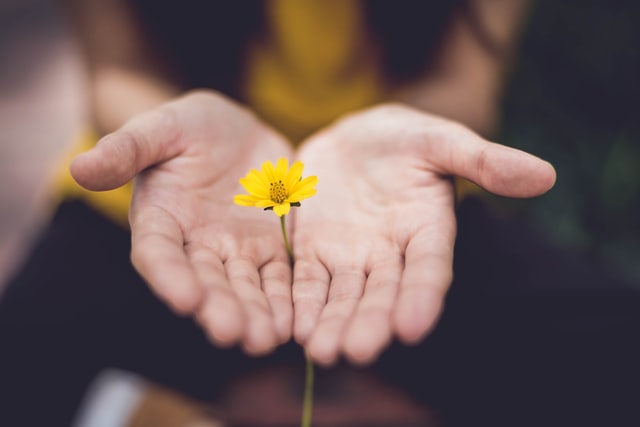
So what is forgiveness then, and how does it relate to joy? When you let go of the pain these hurts or wrongs left you with, you are freeing yourself from negativity. This allows you to instead choose joy. It allows you to understand that people make mistakes, just like you do. It gives you space to be compassionate - toward yourself and others.
This is by no means excusing the wrongs. Instead, it is choosing to only carry compassion and understanding rather than hurt and anger. These more positive attitudes are lighter and more character-building.
Once you accept that you will get hurt in life but that you can recover from it, you can become less fearful and more resilient. You can bounce back quicker. You can tolerate more pain, and know when to avoid unnecessarily expose yourself to it. This leads to a life that is filled with joy even in the midst of pain or difficulty.
Summary
As I said at the beginning of this post, these are all skills that take practice to develop. However, if you work at it you can learn how to see the good in any situation, find meaning in difficulty, and hold onto joy without fear or pain getting in the way. The reward is priceless and well worth the effort.
If you're tired of feeling frustrated or constantly negative about life, consider making a change. Talk with one of our counselors about your anxiety or depression so we can help you break free from their control over your life. We would love to help you find and experience lasting joy!
Start Counseling in Tigard, Oregon Today
Our team of skilled therapists specializes in treatment for anxiety and depression. We understand how difficult it can be to keep going and stay positive despite the circumstances. Contact us today to talk about how we can help you start feeling more productive and confident, or to schedule an appointment with one of our counselors. We offer both face-to-face (in-person) counseling sessions and online video counseling to residents in the state of Oregon.
More Mental Health Services at Discover Counseling in Tigard, OR
Not only can we help with your anxiety and depression, but we can also help navigate these difficult life transitions. Especially, the grief and loss we are all feeling right now! We know that this is an especially difficult time for engaged couples, couples on the brink of separation or divorce, pregnant, postpartum, and parenting. Basically, everyone is facing some type of stressor right now. Please let our therapists help you navigate this difficult time.

About the Author
Aaron Potratz is the owner and clinical supervisor of Discover Counseling. He is a Licensed Professional Counselor in Oregon providing psychotherapy and business consulting services in his private practice. Aaron writes about mental health and relationship issues. He also hosts a weekly podcast called Shrink Think with his business partner, Nathan Hawkins, about facing fears and difficult challenges from a therapist's perspective.
Ready to take the next step?
We'd love to hear from you. Our therapists serve Tigard and the greater Portland area — in person and online across Oregon.
Request an Appointment